“The Character Clause” - Integrity on the Line: College Sports, Scandal, and the Mandate for Real Leadership
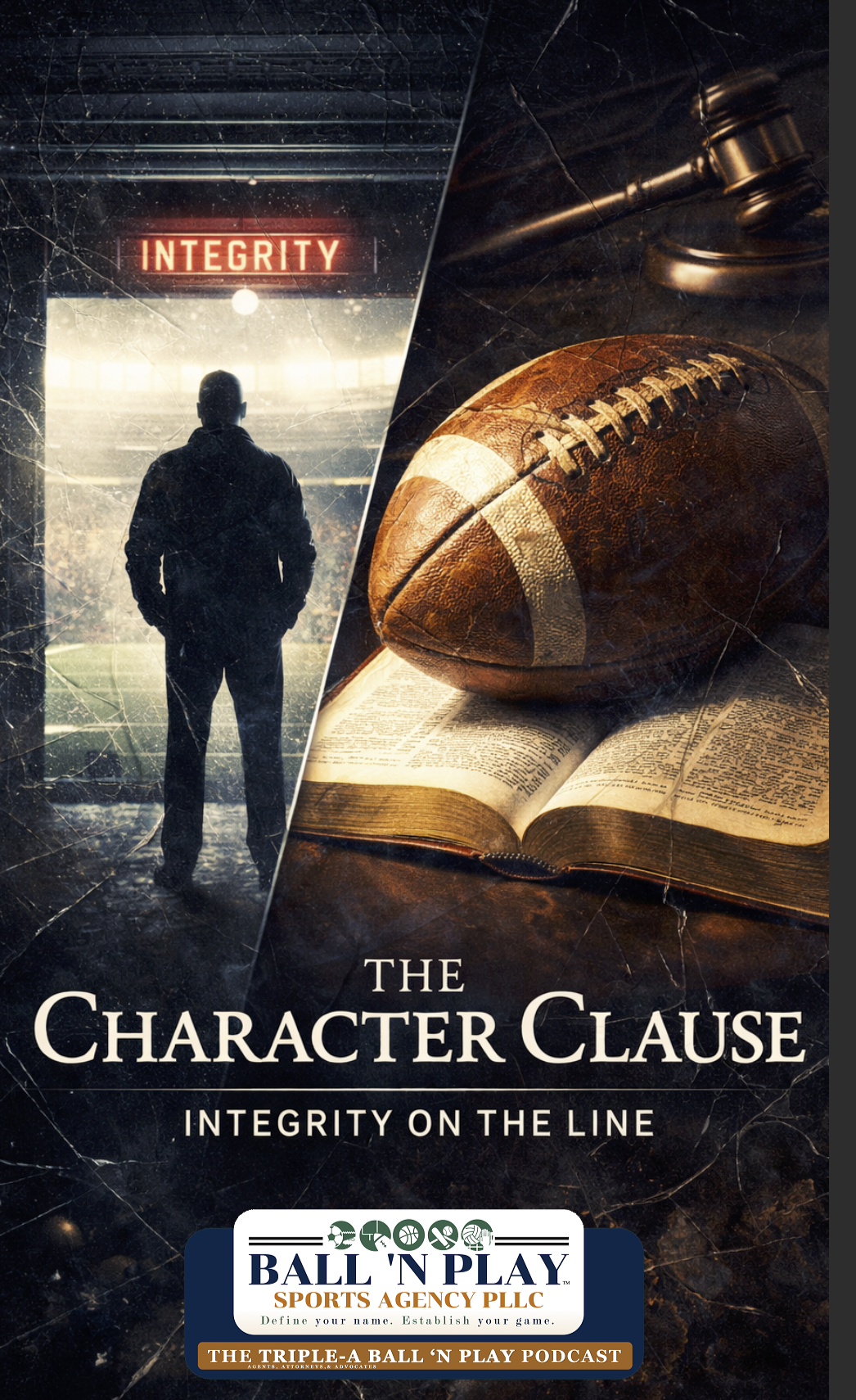
The Character Clause: Integrity on the Line blog post explores the crisis of integrity facing college sports, highlighting recent scandals involving high-profile coaches at Michigan and Ohio University. The author argues that current culture prioritizes wins, rankings, and financial figures (NIL), often at the expense of character and ethical leadership. Misconduct by coaches not only damages programs and reputations but also erodes trust and morale among athletes, staff, and entire communities. The piece draws on biblical principles to emphasize the need for leaders to be models of good works and accountability.
The blog criticizes the double standard where adults in power are excused for ethical failings while athletes are judged harshly for transferring or seeking better opportunities. It calls for practical reforms, including “character clauses” in athlete contracts to protect them from the fallout of leadership failures. The author urges athletes, families, and coaches to demand transparency, accountability, and real character from their institutions, making integrity a foundation rather than a casualty of success.
Ultimately, the post is a call to action for everyone involved in college sports to raise the standard, challenge toxic culture, and ensure that sports build—not break—the next generation. The author encourages readers to share the message and help create a sports culture where character is central to true success.
College sports loves a scoreboard. Wins. Rankings. Playoff math. NIL numbers.
But the real scoreboard—the one that determines whether a program builds people or breaks them—is integrity.
Right now, that scoreboard is flashing red.
In a single week, the headlines gave us a brutal reminder: when leadership fails, the damage doesn’t stay contained. It spreads through locker rooms, recruiting classes, families, and entire communities. We’ve seen a high-profile coach at Michigan arrested and removed. We’ve seen Ohio University fire a coach “for cause” days before a bowl game. These aren’t just “bad decisions.” They’re warnings—signals that something foundational is cracking.
And if we treat this like entertainment, we’ll miss the point.
This isn’t just news. It’s personal. It’s about the culture we’re building for the next generation of athletes—how we teach them to honor commitments, respect authority, and live with their names attached to their choices. It’s about whether character can survive success… or gets sacrificed for it.
Let’s talk about what’s happening—and what we must demand going forward.
When Leadership Fails: Michigan and the Catastrophic Abuse of Power
Let’s start in Ann Arbor.
When the person entrusted to lead one of the most storied programs in college football is arrested and then fired for cause, it’s not a “distraction.” It’s a crisis of stewardship.
The allegations surrounding Sherrone Moore are not a minor compliance issue. Not a slap-on-the-wrist recruiting infraction. The reported conduct—felony-level allegations, stalking, forced entry, intimidation—crosses into the realm where power becomes a weapon.
And here’s what makes it even more sobering: this wasn’t a leader who appeared out of nowhere. This was someone already connected to a culture under scrutiny—already associated with a program that had been criticized publicly for patterns of rule-bending. Yet the institution elevated him anyway.
That decision matters.
Because leadership isn’t just about play-calling. Leadership is moral authority. And when a leader’s private life is out of alignment with public claims, the fallout doesn’t land only on the leader. It lands on the athletes who believed. The staff who endured. The community that trusted. The recruits who committed.
Titus 2:7 gives a standard that doesn’t care about hype:
“Show yourself in all respects to be a model of good works… with integrity, dignity.”
“Show yourself in all respects to be a model of good works… with integrity, dignity.”
That’s the benchmark. Not charisma. Not “culture quotes.” Not success.
Integrity and dignity—especially when nobody’s watching.
Ohio University: “For Cause” and the Athlete Fallout
Now to Athens, Ohio.
Ohio University fired head football coach Brian Smith just days before a bowl game. The reported basis: “for cause,”with records citing contract violations, including an inappropriate relationship with an undergraduate student and alcohol-related misconduct.
Here’s the necessary line: these are allegations, and due process matters. I’m not trying cases in a blog post.
But “for cause” is still a statement.
It’s an institution saying: this wasn’t performance. This was conduct. This was a breach of trust. This was an environment risk. This was a line crossing into the very thing the university is supposed to prevent.
College athletics isn’t a private island. It’s a workplace, an educational environment, and a hierarchy. Coaches don’t just have influence—they have borrowed authority. They shape futures. Scholarships. Opportunity. Exposure. The transfer portal. NFL dreams. NIL leverage. Social dynamics. Mental health.
And when that authority is abused, the impact radiates outward. Players feel betrayed. Staff lose stability. Families lose confidence. A whole program’s identity gets reshaped—usually in ways that take years to repair.
Colossians 3:21 warns:
“Fathers, do not provoke your children, lest they become discouraged.”
“Fathers, do not provoke your children, lest they become discouraged.”
Coaches aren’t parents, but they often function as father-figures in a young athlete’s world. When adults in power act out of self-interest, they don’t just break rules. They break spirits. And discouragement becomes the quiet injury nobody tracks on the injury report.
The Pattern: A System That Excuses Adults and Judges Kids
Here’s the part that should make all of us uncomfortable:
When a player transfers, people call him “soft,” “selfish,” “disloyal.”
When a coach leaves for more money, it’s framed as “business.”
That double standard is poisoning the culture.
We’ve seen repeated examples in college sports where leadership misconduct, ethical collapse, or institutional failure gets minimized until it becomes impossible to ignore. The names change, but the pattern stays familiar: unchecked egos, weak oversight, and a system that protects “valuable” people until the PR cost becomes higher than the protection.
And it leaves athletes living inside hypocrisy.
They are told to sacrifice. To commit. To obey. To represent the program.
Meanwhile, the adults preach character… and then violate it first.
That is not leadership. That is branding.
Biblical Leadership: Truth, Stewardship, Accountability
The Bible doesn’t offer loopholes for powerful people. It offers mandates.
Matthew 5:37: “Let your ‘yes’ be yes and your ‘no’ be no.”
That’s not just about honesty. It’s about integrity under pressure.
Promises are not costumes you wear until the next opportunity shows up.
“Let your ‘yes’ be yes and your ‘no’ be no.”
Biblical leadership is stewardship—handling what you’re entrusted with for the good of others, not your own gain.
And Scripture is blunt about leadership: influence increases responsibility. James says teachers will be judged more strictly because their impact is bigger. And in college sports, that is exactly true. A coach’s collapse is never private. It’s institutional.
Also—let’s clarify something: grace is not permission.
Grace without accountability isn’t grace. It’s cover.
If we excuse wrongdoing because someone wins games, recruits well, or makes money, we aren’t practicing integrity. We’re practicing idol worship—of the scoreboard.
And when schools respond to scandal with vague language like “we’re handling it internally” without transparency or clarity, that’s not wisdom. That’s risk management wearing a halo.
The NIL Era: The Real Test of Character
Now let’s bring this into the present-day reality.
NIL has changed the ecosystem. Money and leverage are now center stage. Contracts, commitments, and promises are under more pressure than ever.
And yes—this is where kids fail too.
We’ve seen real disputes where athletes attempt to sidestep exclusivity agreements or renegotiate deals once leverage shifts. That is not “empowerment.” That is instability.
But it isn’t only athletes. Programs, collectives, boosters, and coaches have all contributed to the mercenary mindset—where commitments last only as long as they feel profitable.
Here’s the danger: if we normalize a world where “yes” means “yes… unless something better comes along,” then sports stops building character and starts training opportunism.
When money becomes the loudest voice, character becomes the first casualty.
Practical Standards: What Athletes, Parents, and Coaches Must Demand
The solution is not more slogans. It’s alignment.
Integrity isn’t a vibe. It’s a practice.
Here are the questions families should ask on visits, calls, and Zooms—before the commitment post ever goes live:
· What is the reporting structure if something feels off?
· Who is the compliance point person—and does the staff respect that office?
· What happens to athletes if staff get disciplined mid-season?
· What is the program’s track record on transparency and accountability?
· What does “character” mean here—practically, not just as words on a wall?
And here’s a contract-forward idea I want normalized:
Character clauses for athletes.
If a head coach leaves or is fired for cause within a defined period—say, one year—the athlete becomes free to move immediately. No penalty. No waiting. No “you’re trapped because the adults failed.”
Because athletes shouldn’t bear consequences for leadership misconduct they didn’t create.
And for athletes themselves: honor your word. If you sign an agreement, treat it like your name is worth protecting—because it is.
Conclusion: Hope, But Not Naïveté
The world doesn’t need more “leaders” who can win games.
It needs leaders whose character can survive success, pressure, temptation, and access.
Sports still has the power to shape lives for the better—but only if we fight for integrity even when it’s costly. The culture doesn’t get better by accident. It gets better because someone decides the standard matters more than the scoreboard.
So don’t fall for speeches. Watch actions.
Don’t worship logos. Examine leadership.
Don’t let the culture define you. Challenge it.
If this resonated, share it with a parent, an athlete, a coach—anyone who still believes sports should build people, not break them.
See you next time—hopefully talking touchdowns, not scandals.
Until then: read your contracts… and read your Bible.
~Lee