
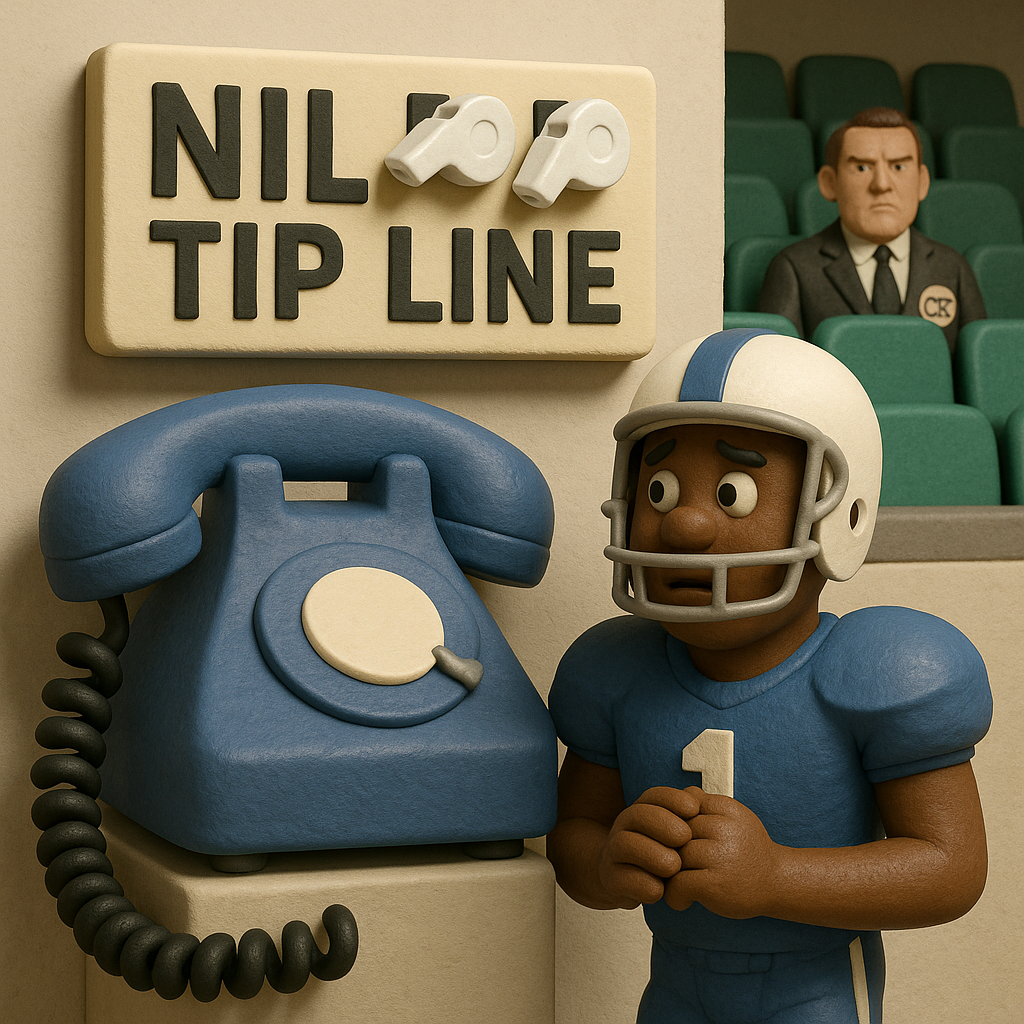
The NIL Tip Line — When Compliance Goes Confidential
The College Sports Commission (CSC) has launched the first confidential whistleblower hotline for Name, Image, and Likeness (NIL) deals, allowing athletes, staff, boosters, and fans to report suspected violations anonymously. As NIL deals and financial stakes grow, this tip line aims to strengthen oversight and accountability, protect athletes, and signal stricter regulation for boosters and collectives. The CSC reviews reports confidentially and can take actions such as investigating, freezing funds, or working with schools. This development marks a shift toward treating college sports as a regulated economic sector, with an emphasis on transparency, compliance, and due diligence for all parties involved.

The SAFE Act: When Congress Steps Into NIL
The NIL era has been loud, fast, and full of growing pains.
Now, Congress wants a say.
The proposed SAFE Act — short for Sports and Athletic Fairness and Equity Act — is the first serious attempt at a federal NIL law that could standardize how athletes, schools, and media partners handle money, contracts, and endorsements.

THE BOOSTER’S DILEMMA — WHEN LOYALTY MEETS LEGALITY
With the rise of Name, Image, and Likeness (NIL) regulations, the role of boosters in college sports has become both more transparent and more legally complex—boosters can now openly support athletes through collectives and endorsements, but any payment tied to recruiting or commitments remains a violation. The new landscape requires boosters to avoid promises to recruits, ensure all support is well-documented and channeled through legitimate means, and focus on genuine marketing value rather than incentives for enrollment. Regulatory scrutiny is higher than ever, and those unwilling to adapt to the new rules face significant legal risk, while those who act transparently can continue to support their teams within the bounds of the law.

Adidas and the $13 Million Power Play in Miami-Dade: A New Era for High School Sports Branding
Adidas has signed a landmark five-year, $13 million contract with Miami-Dade County Public Schools, making it the exclusive supplier of athletic apparel and equipment for 41 high schools. This deal, which includes naming rights to Traz Powell Stadium, embeds Adidas deeply within the region’s sports programs and positions the brand to build early loyalty among top athletic talent. While not a direct NIL (Name, Image, and Likeness) agreement, the partnership sets the stage for future endorsements as Florida now allows high school athletes to benefit from NIL deals. The move signals a new era where corporate partnerships extend beyond uniforms to shape athlete branding and influence the evolving high school sports landscape.
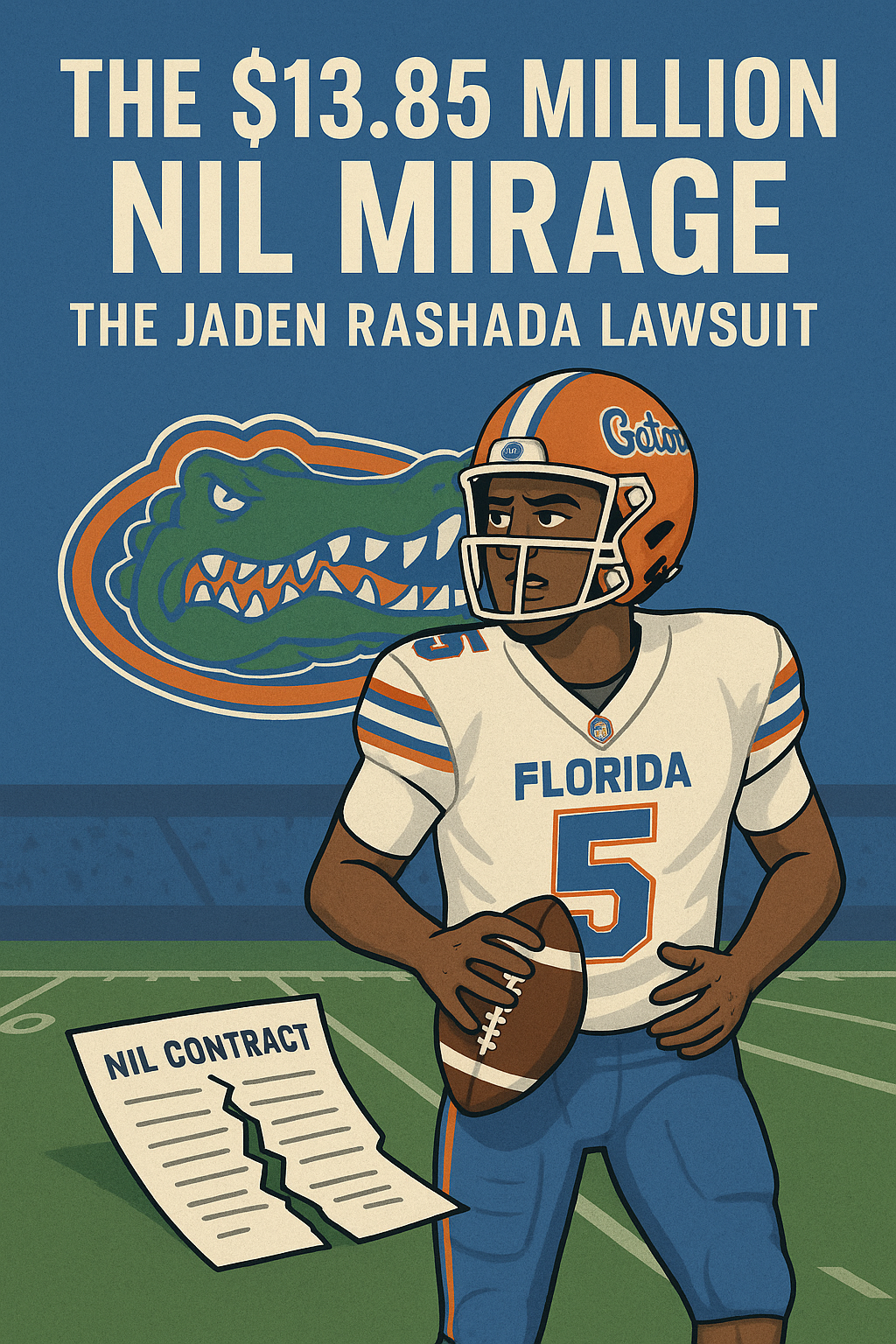
The $13.85 Million NIL Mirage — What the Jaden Rashada Lawsuit Really Means
Five-star quarterback Jaden Rashada’s $13.85 million NIL deal with the Florida Gators collapsed before any payments were made, exposing the risky and uncertain nature of college athlete contracts. Rashada is now suing Florida’s head coach, a top booster, and the Gator Collective for allegedly making promises they couldn’t keep, with the case moving forward in federal court. The lawsuit highlights major legal questions about NIL deals and could force schools and collectives to adopt stricter safeguards, such as proof of funds and legal oversight. The message for athletes and agents is clear: verify deals before signing, as the age of easy promises in college sports is ending.

The 5-in-5 Rule and NIL: Why College Basketball Is Taking a Timeout
Lee Walpole Lassiter explains how NIL budgets, the transfer portal, and the NCAA’s proposed 5-in-5 Rule are freezing basketball recruiting and changing the way coaches build rosters.
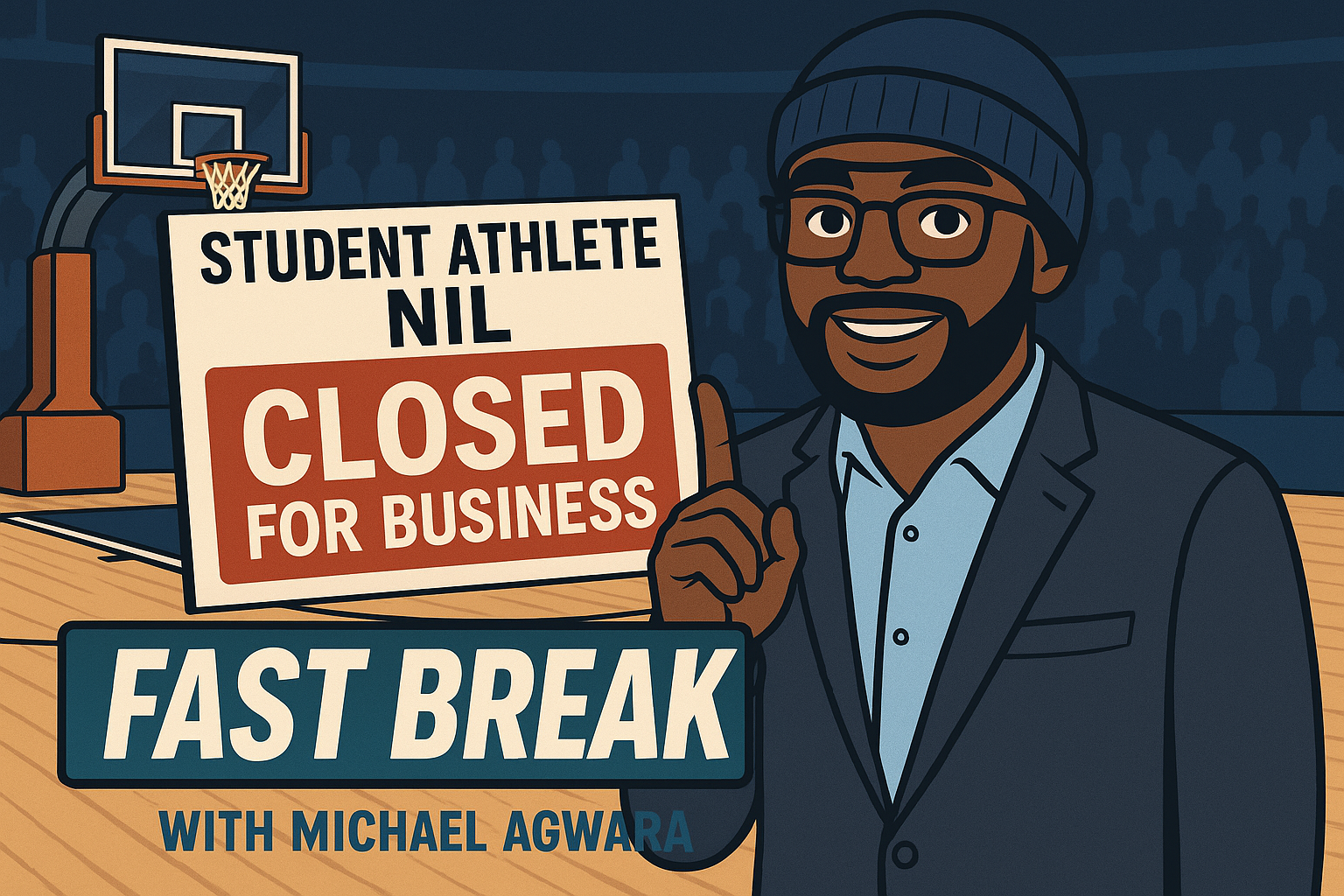
The Demise of Student Athlete NIL: A Case Study in the Fragility of Third-Party Collectives
On October 2, 2025, Sports Business Journal reported that Student Athlete NIL (SANIL), one of the nation’s largest operators of third-party “collectives,” will cease operations (Sports Business Journal, 2025). This announcement is emblematic of the turbulence reshaping the NIL marketplace in the wake of the House v. NCAA settlement and the formalization of revenue-sharing mechanisms between institutions and athletes.

NIL Collectives Are Bypassing the Clearinghouse — What It Means for Athletes
The NIL era was intended to allow college athletes to monetize their name, image, and likeness, but within a few years, the system has faced issues. Collectives, frustrated with delays, are bypassing the NCAA’s NIL Go clearinghouse, which could significantly impact athletes' futures.

NIL Revenue Sharing — The $20 Million Shift
Summary: This blog examines the evolving landscape of college athlete compensation following the introduction of Name, Image, and Likeness (NIL) rights and the House v. NCAA settlement, which now allows schools to share millions in revenue with athletes. While payments are largely concentrated in high-profile sports, the shift creates significant financial, transparency, and legal challenges for athletic departments, especially regarding revenue generation, equity, and compliance with Title IX.
Watch Michael’s Fast Break here: https://youtube.com/shorts/sI5NImvd8Ik?feature=share

In the Arena of Faith and Sport: FCA in Broward & Miami-Dade
Faith and sports collide in this Fast Break with Lee as she dives into how the Fellowship of Christian Athletes (FCA) is shaping the next generation of players and coaches across South Florida. Discover how FCA huddles, lacrosse programs, and campus outreach are transforming local athletics with purpose and passion.
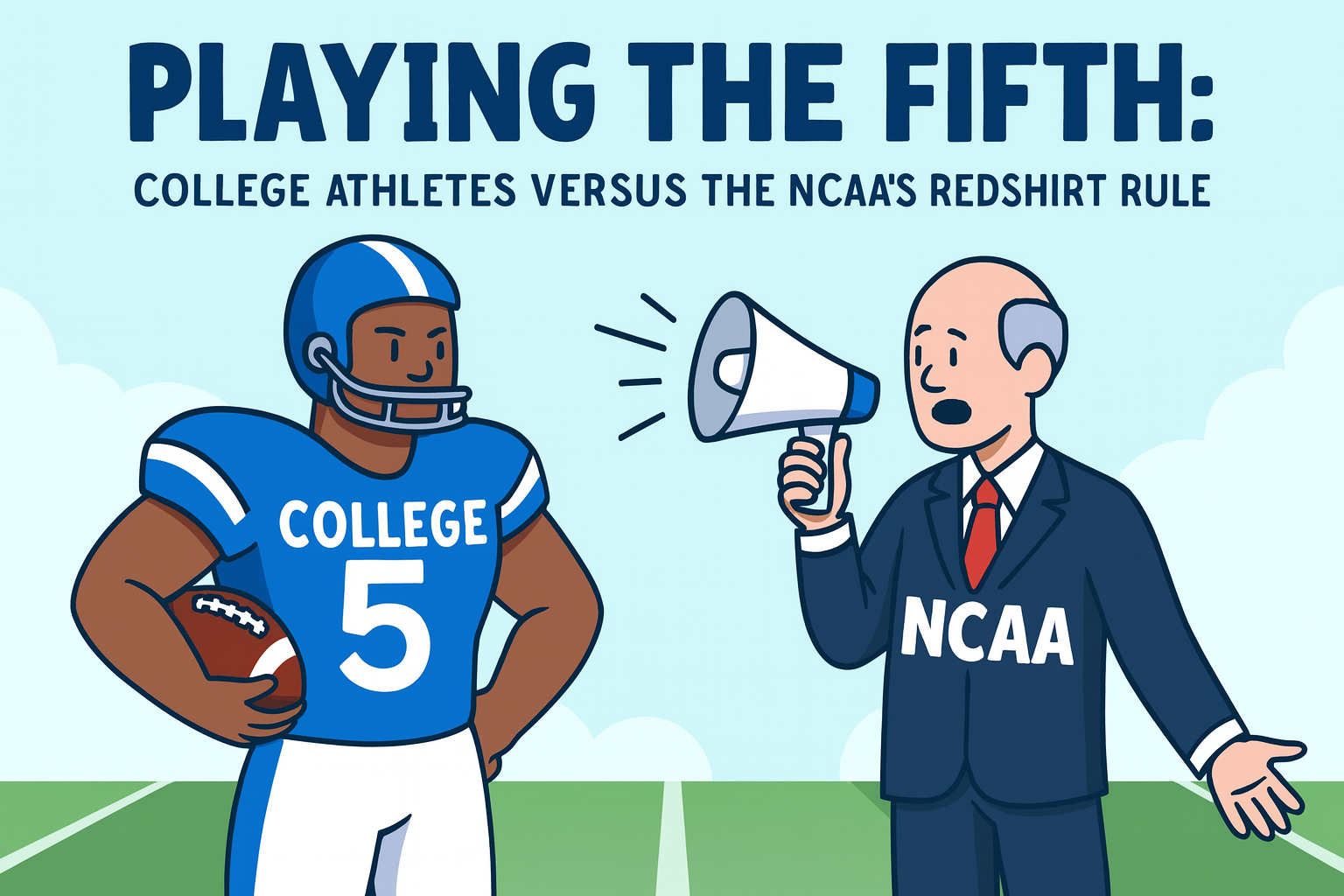
Playing the Fifth: College Athletes versus the NCAA’s Redshirt Rule
Summary
A group of college athletes has filed a class-action lawsuit against the NCAA’s redshirt rule, arguing that the limitation of four years of competition within a five-year eligibility window violates antitrust law and restricts their ability to earn income from Name, Image, and Likeness (NIL) deals. The athletes advocate for “five years to practice, five years to graduate, five years to play,” emphasizing the lost opportunities caused by the current rule. Previous lawsuits and involvement from the Department of Justice highlight growing legal pressure on the NCAA’s control over athlete eligibility and compensation. This legal battle reflects a broader movement to reform longstanding amateurism rules in college sports and ensure athletes have fair access to both competition and earning potential.
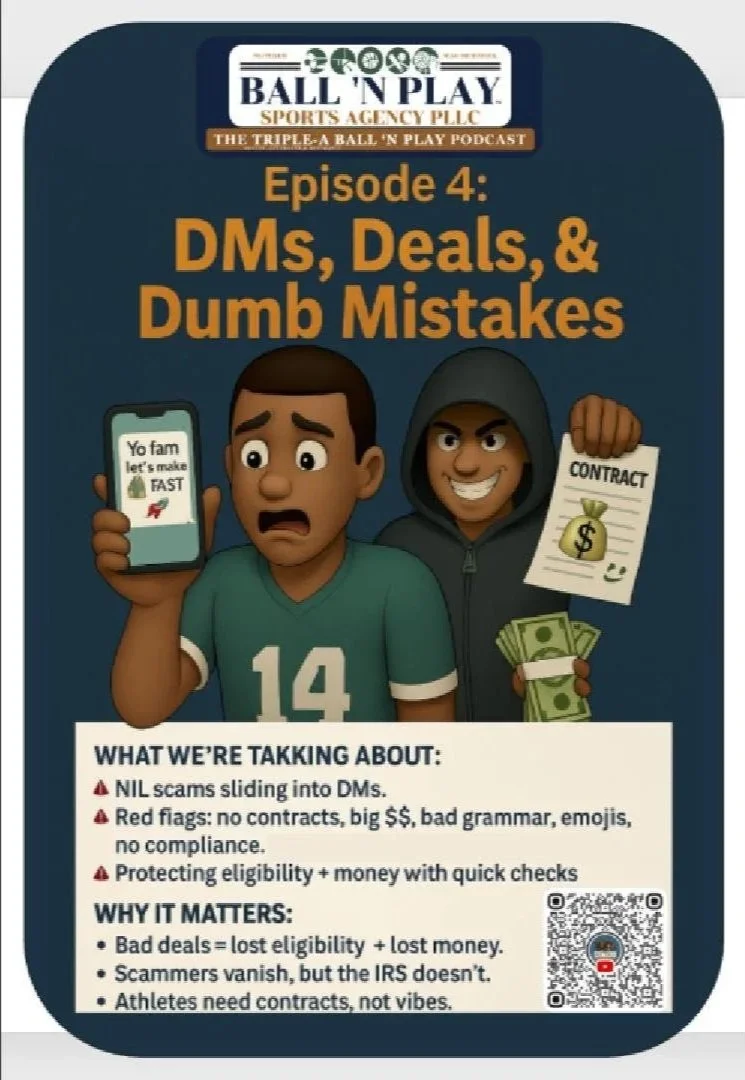
Episode 4: DMs, Deals, & Dumb Mistakes
Athletes — don’t get scammed in the NIL era. In Episode 4, Michael and Lee expose fake agents, shady DMs, and bad deals that can wreck your eligibility and your money. Learn the red flags, what a real contract looks like, and how to protect your NIL future.

Why the FTC’s Influencer Rules Matter for NIL—and Why Florida Should Actually Be Paying Attention
Image courtesy of the FTC website.
Learn how new FTC endorsement rules affect NIL deals and athlete brand partnerships in 2025. Our sports law team explains compliance, disclosure requirements, and how athletes can protect their eligibility and reputation.

When Coaches Pack Their Bags: The NIL Ripple That’s Hitting College Dugouts and Sidelines
Image Copyright https://www.gettyimages.com/detail/news-photo/head-coach-jim-harbaugh-of-the-michigan-wolverines-receives-news-photo/1918691978
The rise of Name, Image, and Likeness (NIL) deals has disrupted college sports, making coaches as mobile as athletes and triggering a wave of defections to professional leagues. Tradition and loyalty no longer guarantee stability, as coaches seek relief from NIL chaos, recruitment pressures, and booster politics. This volatility affects athletes and families, who must now consider not just coaches but the entire structure and culture of a program. In the NIL era, adaptability is essential for both players and coaches, as change is the only certainty in college athletics.
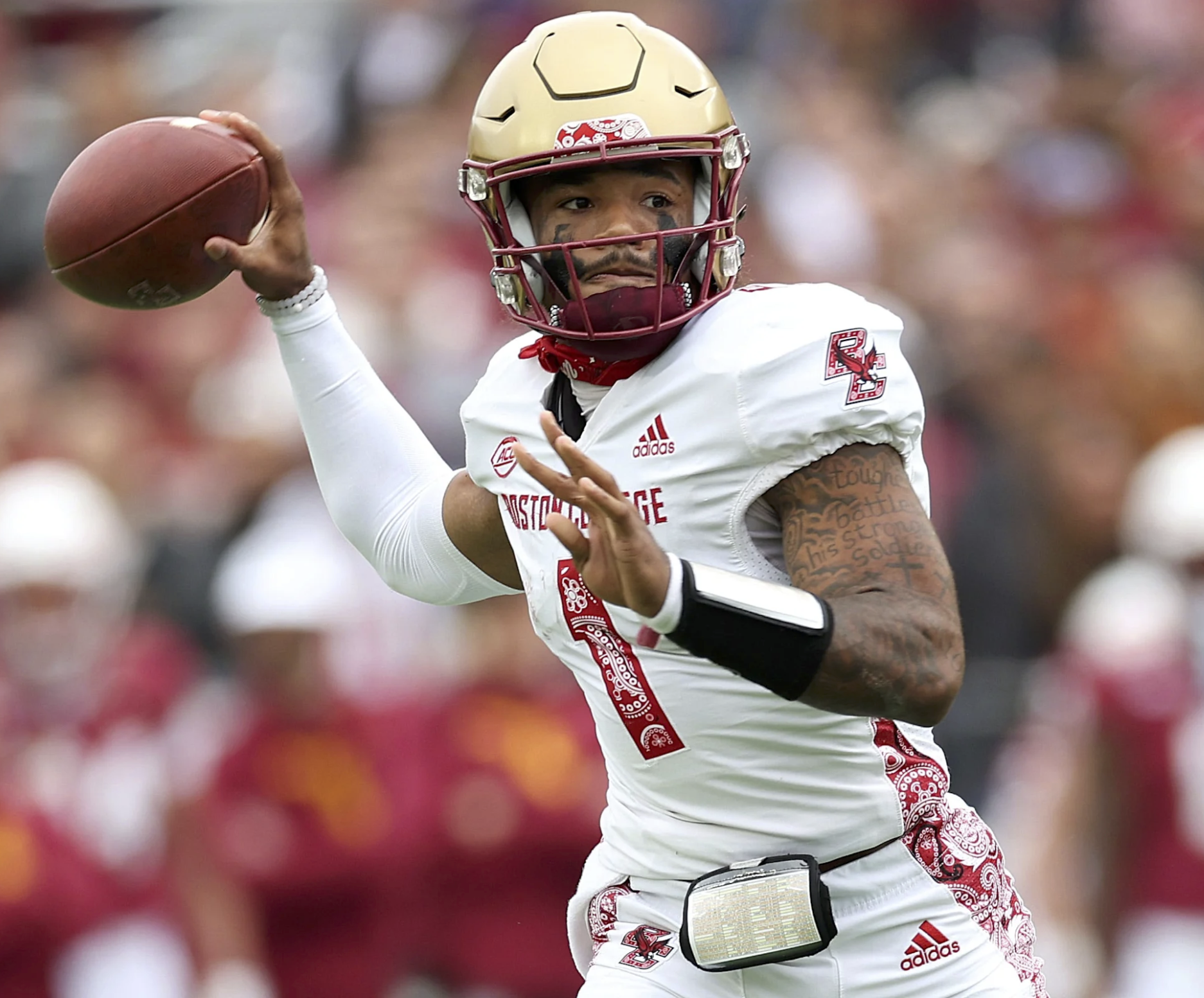
When Confidence Turns Currency — Thomas Castellanos, NIL Booms, and What It Means for Our Podcast Fam
Image Credits: Thomas Castellanos #1 of the Boston College Eagles makes a pass against the Florida State Seminoles during the first half at Alumni Stadium on September 16, 2023 in Chestnut Hill, Massachusetts. (Photo by Maddie Meyer/Getty Images)
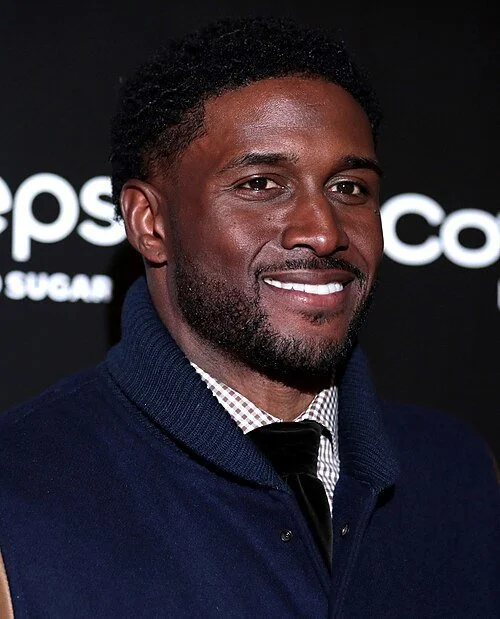
Here’s Why Reggie Bush’s Case Is Your Contract Wake-Up Call
Reggie Bush’s attorney spent Friday in a Los Angeles courtroom asking a judge to rethink a tentative ruling that would kick parts of Bush’s NIL lawsuit to the curb. Translation: his team is arguing, among other things, that Bush didn’t sign his rights away—and that it’s not too late to hold the NCAA, USC, and the Pac-12 accountable for using his name, image, and likeness without paying him. The judge has signaled the claims may be time-barred (lawyer-speak for “you missed the filing deadline”), but is considering final dismissal requests before issuing a ruling. (Bloomberg Law, MyNewsLA.com)